Water Phase vs Oil Phase in Skincare: How to Choose
The right base starts with how the product will be used. That decision guides where ingredients go, which format to prototype and what the finished product has to prove.
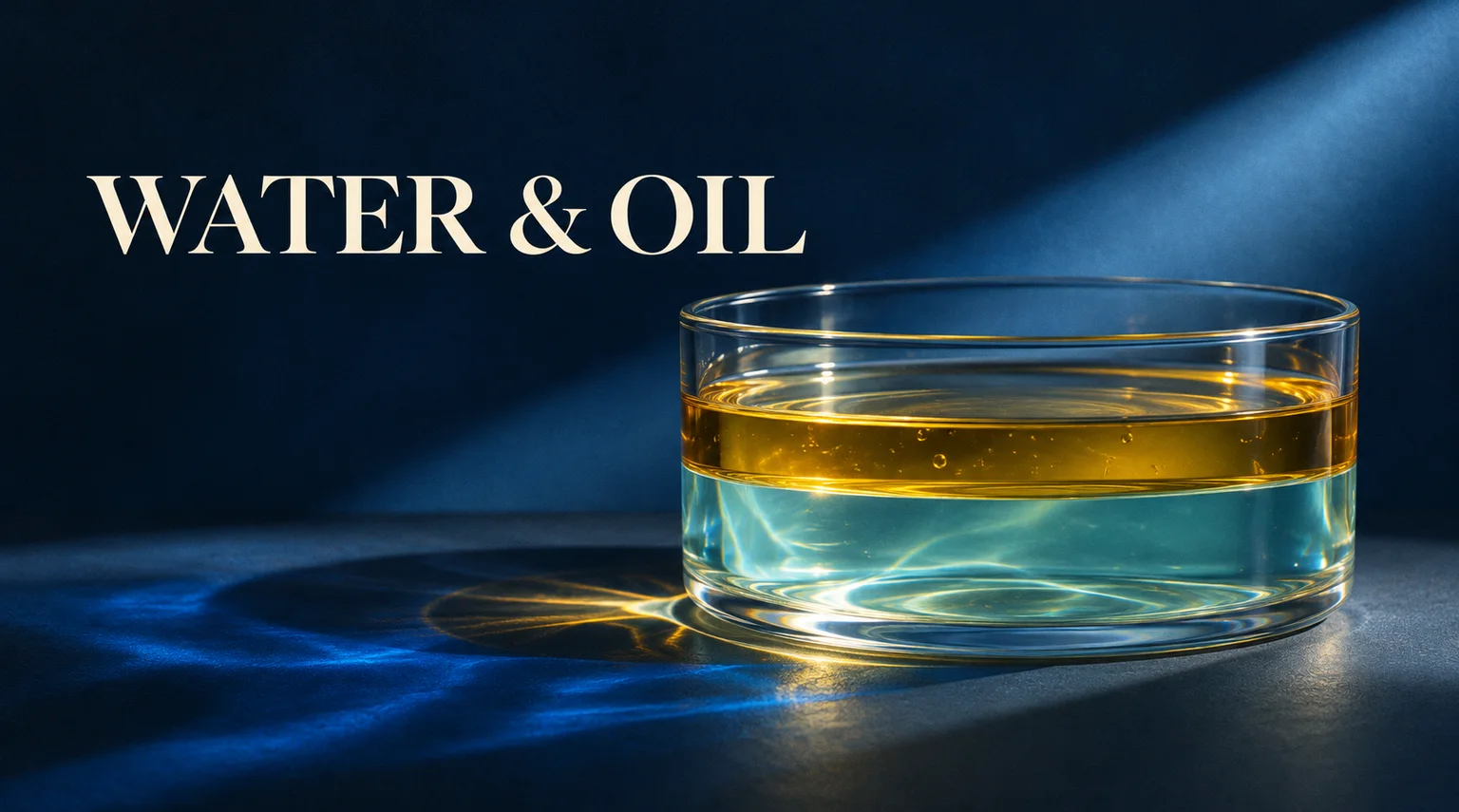
To choose the water and oil phases in a skincare formula, start with what each ingredient needs to dissolve or disperse, then choose a gel, oil-in-water emulsion, water-in-oil emulsion or anhydrous base. A serum can be a water gel, a milky emulsion or a face oil. The name leaves room for different formats, textures and use conditions.
For the first ODM brief, I ask which ingredient or claim needs to stay, how the product should feel during application and after it sets, and how the product will be shipped and dispensed. Those answers make a better starting point than a fixed water-to-oil ratio.
Start with where each ingredient belongs
Water phase. Typically built around water, it can carry water-miscible humectants such as glycerin and ingredients suited to aqueous dissolution or dispersion. Check pH, temperature and whether the ingredient contributes salts that could affect thickening or stability. Hyaluronic acid materials can have different hydration and dispersion needs by grade.
Oil phase. This can carry squalane, emollient esters and other oil-compatible materials, and can influence spread, slip and residue. A powder, a pre-dispersed grade and an encapsulated grade of the same named ingredient may be handled differently. Ask for the supplier’s material code, carrier, specification and processing guidance.
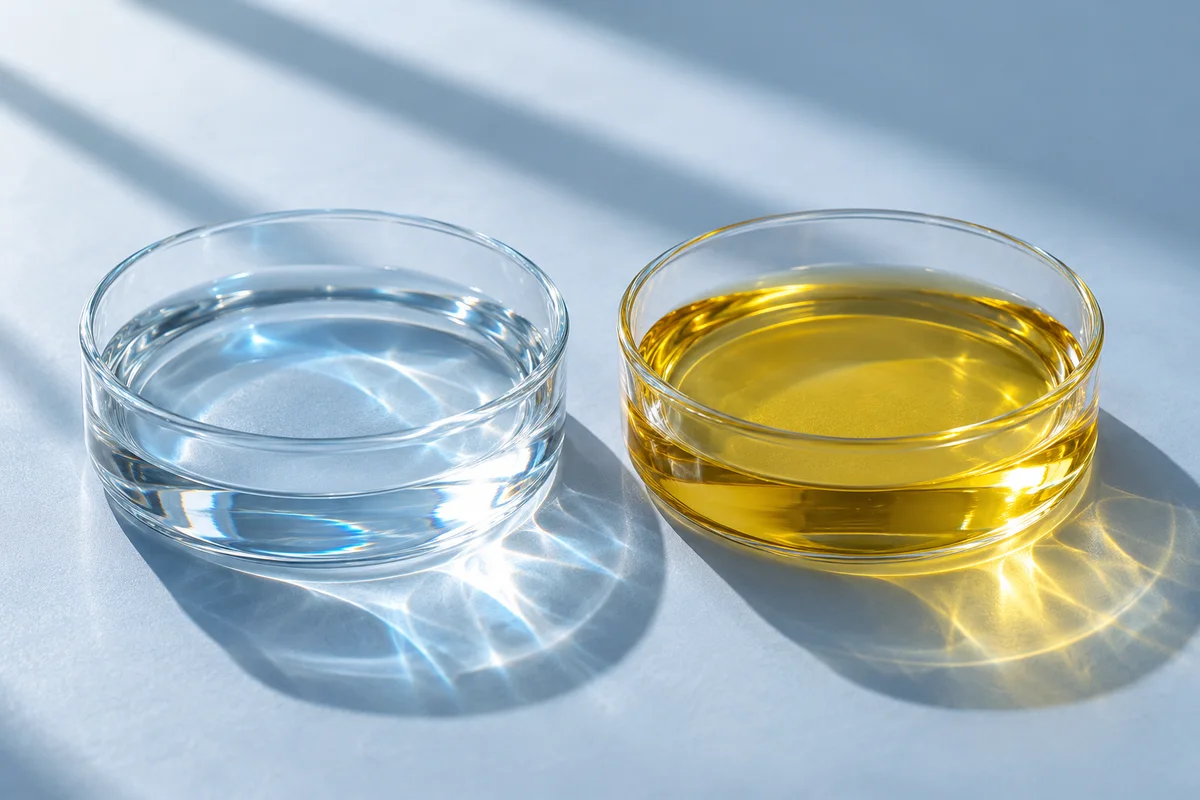
Three formats to prototype
- O/W
- Oil-in-water. Oil droplets in a continuous water phase. Consider as a starting point for a milky serum or daily lotion.
- W/O
- Water-in-oil. Water droplets in a continuous oil phase. Consider when film feel or a richer finish matters.
- Anhydrous
- Anhydrous. Typically no intentionally added aqueous phase. Consider for face oils or balms and assess oxidation and in-use risks.
Match the format to the job, then compare samples
Light serum or daily lotion
If the key ingredients suit an aqueous phase and the target is a clear finish with little residue, screen a water gel. If the brief also calls for an oil-soluble component, extra slip or a milky look, compare an O/W prototype. Check tack and pilling under sunscreen using the same amount and application sequence. Explore Fubao’s serum formats and see how sunscreen choice varies by use.
Film feel, balm or face oil
For a cream intended to leave a film, compare a W/O prototype with a richer O/W option. Face oils and balms may suit a different job, such as slip or a soft afterfeel. The continuous phase defines the emulsion structure. Emollients, thickeners, spread and application amount all shape the experience. Read the cross-market formulation guide
Test the finished formula in its final pack
Check stability and scale-up. Set storage and use conditions to reflect product risk. Track separation, appearance, odour, viscosity and pH where applicable. Check squeeze force or pump delivery and leakage in the final pack. After scale-up, review mixing, filling and batch consistency. A short observation without separation covers only the time and conditions tested.
Assess microbiological and oxidation risk. For water-containing products, assess preservation against the intended use and evaluate antimicrobial protection when applicable. For anhydrous products, review raw materials, microbial risk, possible water ingress during use, and oil oxidation. Match the test plan to the final formula, pack and instructions. Explore Fubao’s factory and laboratory
What to put in an ODM sampling brief
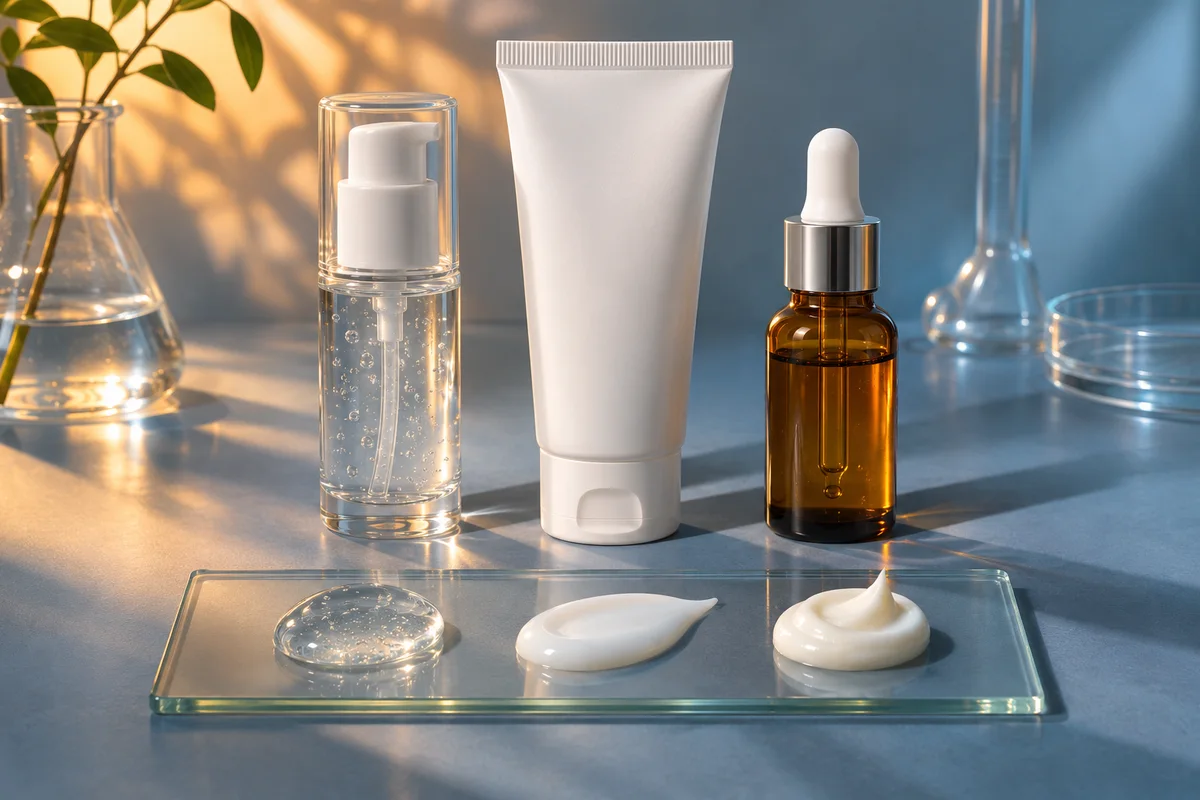
State the target users, use occasion, leave-on or rinse-off format, reference sample, must-keep ingredients, proposed claims, market and final pack. Turn “light” or “rich” into observable criteria: spread resistance, tack, film feel, residue, layering and dispensing.
Ask the lab to compare two candidate bases at the same intended dose and observation points. Screen feel and packaging first, then agree on finished-product tests, acceptance criteria and scale-up records. Explore skincare ODM services or send Fubao your formulation brief.
Frequently asked questions
Is there a universal water-to-oil ratio?
There is no ratio that works across all formats. Ingredient needs, the continuous phase, feel, stability and packaging all shape the choice. The phase present at the higher percentage need not be the continuous phase.
Can I tell O/W from W/O by the ingredient list or feel?
Those can provide clues. Confirm the type from the finished product’s continuous phase and formulation checks. Oil droplets in water are O/W, and water droplets in oil are W/O.
Does an anhydrous product need a preservative challenge test?
Start by assessing microbiological risk for the finished product and intended use. The anhydrous description alone cannot determine whether a challenge test is appropriate. Document the decision with the formulation and safety teams.